
GNT Services · Render Cleaning Knowledge Centre
How to clean render safely: The complete guide.
K Rend, silicone and monocouche finishes can all develop staining over time. Discover what causes it, how professional render cleaning works and when cleaning is a better option than repainting.
Written for homeowners, landlords and commercial property managers who want to understand how to restore stained exterior walls without causing unnecessary damage.
Ask About Your Render →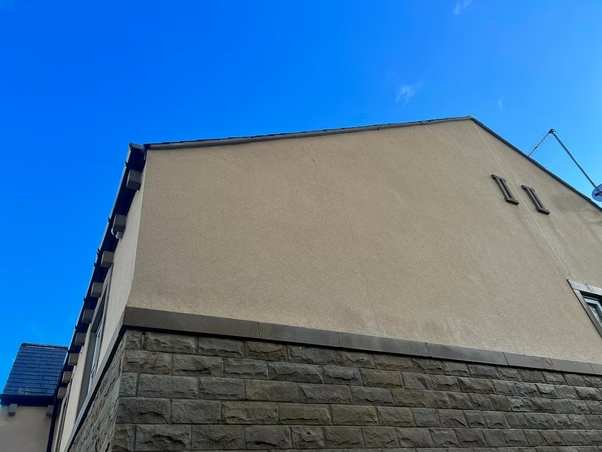
Understanding render cleaning
Can dirty or stained render really be restored?
Modern render is widely used on homes, extensions and commercial buildings because it provides an attractive exterior finish. White, cream and coloured render can look particularly striking when newly applied.
However, over time, external walls may become affected by green algae, red or pink staining, dark patches and atmospheric dirt. This can happen even when the render itself is still in good condition.
In many cases, professional render cleaning can significantly improve the appearance of the surface without repainting or replacing it. The key is understanding what caused the staining and selecting a cleaning method appropriate for the particular render system.
Incorrect treatments, incompatible chemicals and excessive water pressure can damage exterior finishes. This is why render should not automatically be cleaned in the same way as patios, driveways or other hard surfaces.
Identify the render, assess its condition and establish the cause of staining before choosing a cleaning method. A treatment suitable for one building may be inappropriate for another.
The causes of discolouration
Why does exterior render turn green, red or black?
Not all render staining has the same cause. Correct identification matters because different contaminants may respond to different treatments.
Green algae
Green biological growth commonly develops on surfaces that remain damp or receive limited direct sunlight.
Shaded walls, north-facing elevations and areas near trees or dense planting can be particularly susceptible.
Red or pink staining
Red and pink discolouration on light-coloured render is often associated with pigmented microorganisms, including certain algae.
Identification matters because not every reddish mark is biological; some stains may have a mineral or other origin.
Black staining and streaks
Dark marks may result from biological growth, atmospheric pollution, dirt accumulation or water carrying deposits down the wall.
The cause needs assessing rather than assuming every dark mark can be removed using the same treatment.
Why some walls stain faster than others
Even two elevations on the same property can weather very differently.
One wall may receive several hours of sunlight each day, while another stays shaded and damp for much longer. Moisture, temperature, surrounding vegetation and surface texture all influence biological growth.
Leaking gutters, dripping overflow pipes and poorly detailed architectural features can also create persistent streaks or localised staining.
Identifying these factors can help property owners understand why contamination appears and whether maintenance or repairs should accompany cleaning.
Know your surface
K Rend, monocouche and silicone render: what is the difference?
Although these finishes can look similar, their composition and cleaning requirements can differ considerably.
01 / K REND
Cleaning K Rend
K Rend is a brand associated with several render systems, not a single universal surface type. The exact product and finish can influence its maintenance requirements.
Biological staining may develop on K Rend, especially on shaded or damp elevations. Compatible specialist treatments may improve the finish without the need for repainting.
Important: avoid assuming that any pressure-washing setting or cleaning chemical is suitable for every K Rend system.
02 / MONOCOUCHE
Cleaning monocouche render
Monocouche render is generally a through-coloured render finish, often with a textured appearance.
Biological growth and grime can become noticeable as the surface weathers. Cleaning methods must account for the texture, condition and characteristics of the particular product.
Excessive pressure can disturb vulnerable areas or create uneven cleaning marks.
03 / SILICONE
Cleaning silicone render
Silicone-based render systems are often selected for their water-repellent properties and exterior durability.
However, water repellency does not make the surface completely immune to biological growth or atmospheric deposits.
Compatible products and appropriate application methods are important to protect the existing finish.
Painted render, traditional lime finishes and older building materials may require a different approach. Historic or fragile surfaces should be assessed individually, and specialist conservation advice may be appropriate for sensitive buildings.
Selecting the appropriate method
Soft washing versus pressure washing: which is better for render?
High-pressure washing can be effective on certain robust exterior surfaces, but render requires a more considered approach.
Excessive pressure can potentially erode textured finishes, force water into cracks, damage loose sections or create visible variations in colour and texture.
Soft washing is a broad term for cleaning methods that use suitable chemical treatments and controlled application rather than relying primarily on mechanical pressure.
For biologically contaminated render, a specialist cleaning treatment may be used to address the organisms responsible for staining. The process may involve controlled rinsing, further cleaning or a period of treatment action, depending on the surface and product.
However, soft washing is not automatically safe simply because the pressure is low. Chemical compatibility, dilution, surface condition, runoff management and the manufacturer's instructions are all important.
GNT Services assesses the render before selecting an appropriate treatment and application method.
What happens during a professional clean?
How professional render cleaning works.
The exact process varies between properties, but a sensible approach involves assessment, preparation and surface-appropriate treatment.
Identify the surface and staining
Check the render type, existing condition, manufacturer guidance and signs of cracks, loose material or failed coatings. Assess what is causing the discolouration.
Plan access and protection
Consider upper elevations, windows, decorative finishes, landscaping, drainage and any neighbouring areas requiring protection. Select suitable equipment and cleaning products.
Clean using appropriate methods
Apply a compatible treatment using controlled methods, following relevant product instructions. Rinse or undertake further treatment as appropriate, then review the result.
Light dirt on a sound, accessible surface may sometimes be managed in accordance with the render manufacturer's care instructions. However, heavily stained, delicate or elevated render can present damage and safety risks. Avoid experimenting with concentrated chemicals, mixing cleaning products or using aggressive pressure-washing equipment.
GNT Services · Actual projects
Real render cleaning before and after.
These photographs show completed GNT Services work, demonstrating the results achievable when suitable rendered surfaces are professionally cleaned.
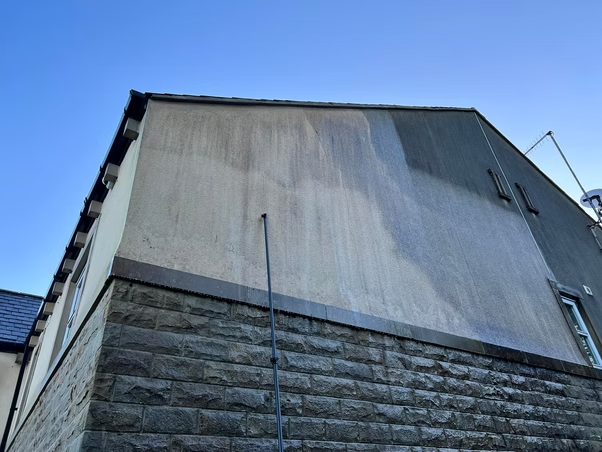
Gable render restored
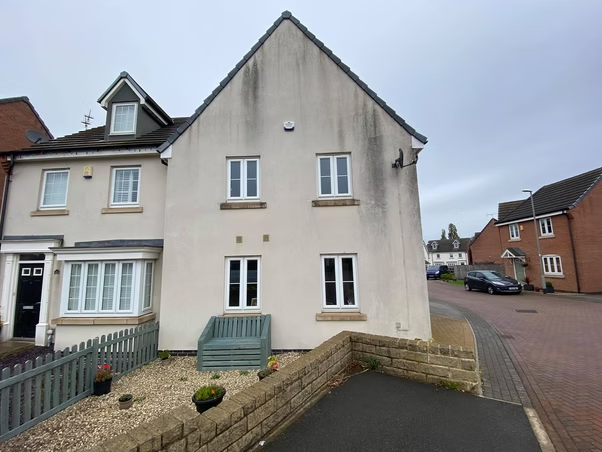
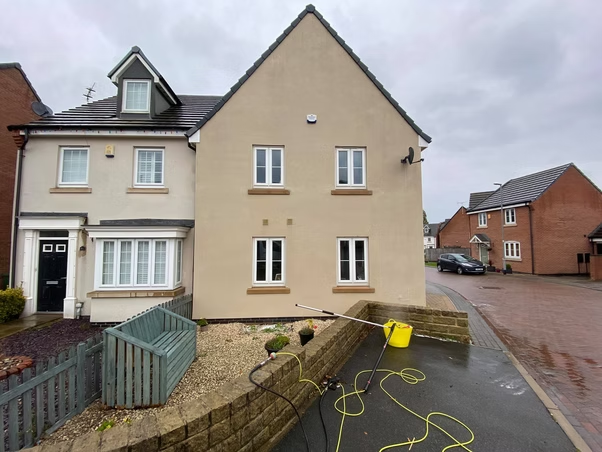
House frontage refreshed
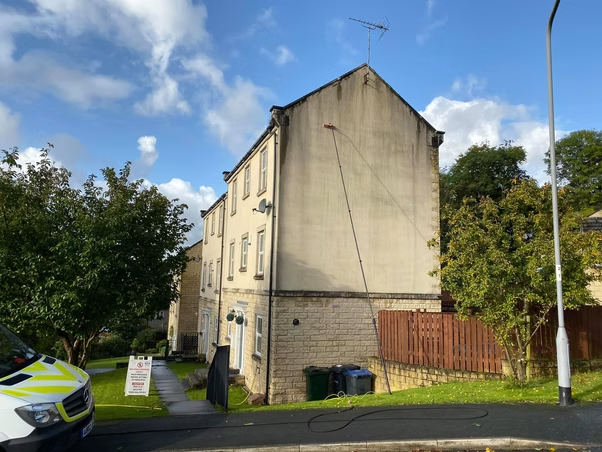
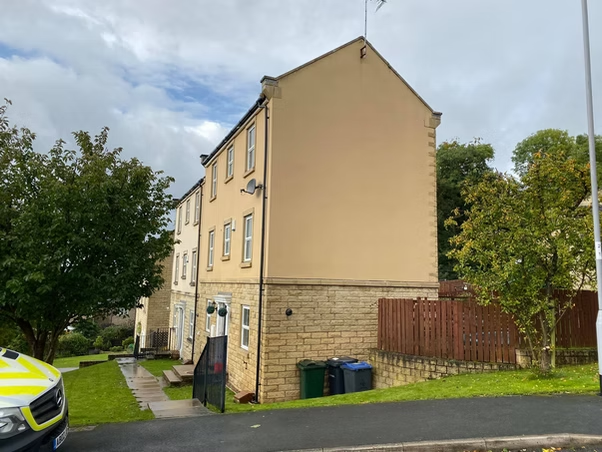
Exterior elevation improved
These are examples of GNT Services' work. They are not attributed to any particular location listed later in this guide. Results vary depending on staining and the existing surface condition.
Cleaning, repairing or repainting?
Does stained render really need repainting?
One of the most common reasons property owners consider repainting is that their render has become green, patchy or discoloured.
However, there is an important difference between surface contamination and failure of the render itself.
If the underlying finish remains sound and much of the discolouration is caused by removable algae or dirt, specialist cleaning may produce a substantial visual improvement.
This can reduce the need for unnecessary repainting and preserve the existing finish where appropriate.
Conversely, peeling coatings, cracks, loose render, severe fading and water ingress may require repairs or redecorating rather than cleaning alone.
Cleaning does not repair defective materials or solve underlying moisture problems. A proper assessment helps establish which option is most sensible.
Long-term render care
How can you help keep rendered walls cleaner for longer?
No cleaning treatment can guarantee that biological staining will never return. However, sensible building maintenance can help reduce conditions that encourage contamination.
Maintain gutters and drainage
Leaking or overflowing gutters can repeatedly wet the same section of wall, creating prominent streaks and persistent dampness.
Keeping gutters, downpipes and drainage details in good condition helps address one potential source of recurring staining.
Manage vegetation
Trees, hedges and climbing plants can shade exterior walls and reduce airflow, potentially increasing the time they remain damp.
Appropriate pruning and maintenance may help improve drying conditions where vegetation is contributing to the problem.
Inspect the render periodically
Check for cracks, failed seals, loose sections and areas showing unusual staining.
Addressing defects early can help protect the existing finish and inform decisions about future cleaning or maintenance.
There is no universal interval. The need for cleaning depends on location, exposure, shade, surface condition and the speed at which contamination returns. An assessment is more useful than automatically recommending a fixed annual cleaning schedule.
Commercial & managed properties
Render cleaning for larger buildings and property portfolios.
Professional render cleaning is not limited to individual houses. Modern render systems can also be found on apartment buildings, offices, schools, hotels and other commercial or managed properties.
Larger projects often require additional consideration of access arrangements, site safety, neighbouring areas, scheduling and the impact of cleaning on building occupants.
Property managers may also need to distinguish between routine maintenance, surface contamination and defects that require specialist repairs.
GNT Services provides commercial render cleaning across Yorkshire and Lancashire, with project requirements assessed individually.
Discuss a Commercial Project →Our service areas
Professional render cleaning across Yorkshire and Lancashire.
GNT Services is based in Oakworth, near Keighley, and provides domestic and commercial render cleaning across a wider regional service area.
Explore our dedicated location pages for more information about render cleaning in your area. For larger projects or locations further from our base, contact us with your postcode and project details to confirm coverage.
Also looking for general exterior cleaning? Explore our domestic services or commercial services.
Frequently asked questions
Common questions about cleaning exterior render.
What is the safest way to clean K Rend?
Identify the specific render system, assess the surface and follow relevant manufacturer guidance. Suitable professional treatments and controlled methods may be appropriate, while aggressive pressure washing and incompatible chemicals can cause damage.
Can algae be completely removed from render?
Many types of biological contamination can be treated effectively, but the final appearance depends on the condition of the surface and whether other staining or permanent damage is present.
Can you pressure wash silicone render?
Some silicone render systems can be vulnerable to excessive pressure or unsuitable cleaning techniques. A surface-specific assessment and the manufacturer's instructions should determine the treatment method.
What causes red staining on K Rend?
Red or pink staining is often associated with pigmented biological growth, although not every reddish mark has the same cause. Identifying the contamination helps determine which treatment is appropriate.
Is render cleaning cheaper than repainting?
Cleaning can be less involved than repainting when the original render is sound and staining is removable. However, actual costs depend on the building, access and work required. Repairs or repainting may still be necessary for damaged surfaces.
Can cleaning damage render?
Yes. Excessive pressure, incompatible chemicals and incorrect techniques can damage some finishes. Existing defects can increase the risk. This is why surface assessment and a suitable cleaning method are important.
How long does professional render cleaning take?
It varies with property size, access, staining and the treatment selected. Some smaller jobs may be completed within a day, while larger or more complex properties can require additional time or visits.
Can commercial buildings be soft washed?
Suitable commercial rendered surfaces can often be cleaned using professional soft-washing methods. Building access, material compatibility, site safety and surrounding areas must all be considered.
How can I get a quotation from GNT Services?
Send photographs of the affected walls, your postcode, details of the building and any known access restrictions. You can contact GNT Services by WhatsApp, phone, email or the online quotation form.
Contact GNT Services
Does your render need professional attention?
If your exterior walls are affected by algae, red staining, dark streaks or discolouration, contact GNT Services for advice and a free, no-obligation quotation.
Include your postcode, the render surfaces requiring attention and photographs where possible. We'll discuss the next appropriate step.